european horizon & regional project-context
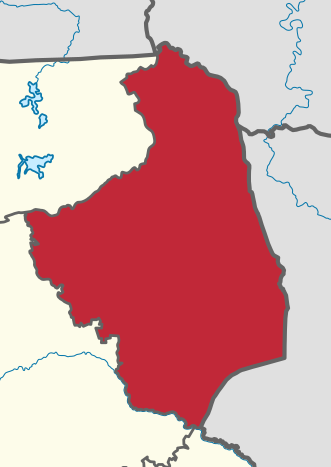
The project is situated at the eastern external border of the European Union, in the Polish region of Podlasie, directly bordering Belarus. This border has become a focal point of geopolitical tensions, hybrid conflicts and humanitarian crises.
Since 2021, the region has been marked by illegal border crossings, state-driven provocations, pushbacks and a growing conflict between the protection of EU external borders and the fundamental right to asylum.
Podlasie thus represents a concrete European frontier where abstract political decisions translate into real human experiences. The project takes this specific regional situation as a starting point to explore how borders are produced, defended, crossed and symbolically charged – and how they affect individuals, communities and democratic values.
.
project-approach
The project follows an interdisciplinary and participatory approach, combining artistic practice, political education and critical reflection. Young participants from different European countries work together in mixed groups, supported by artists, educators and researchers.
Instead of offering predefined answers, the project creates experimental spaces for observation, dialogue and creative production. Artistic methods such as visual arts, performance, sound, writing and spatial experiments are used as tools to explore complex social and political questions.
The focus lies on process-based learning, collective reflection and the translation of lived experiences into artistic and communicative forms.
.
core themes of the meeting
The meeting addresses borders not only as physical lines, but as social, political and symbolic constructions. Central themes include migration and mobility, security and human rights, inclusion and exclusion, memory and responsibility.
Participants examine how borders shape identities, narratives and power relations, and how artistic practices can challenge dominant perspectives. Particular attention is given to ethical dilemmas at Europe’s external borders, the tension between national sovereignty and international law, and the role of civil society and culture in times of crisis.
The meeting aims to foster critical thinking, empathy and transnational dialogue.
.