under construction - waiting for proposals from participants ,
- .Join your ideas with our framework, you decide what we will realize!
program - activities
A — Creative Workshops
Art as resilience. Art as meeting.
Art as responsibility.
The creative workshops are the heart of the project. They invite participants to explore political realities, ecological crises, personal fears, and future visions through collaborative artistic practice.
Art becomes a space for resilience, reflection, and shared responsibility.
A1: political art as resilience-tool
This workshop cluster explores how artistic practice can become a form of resilience under political, social and ecological stress. Through material, performative and conceptual experiments, participants examine vulnerability, resistance and transformation.
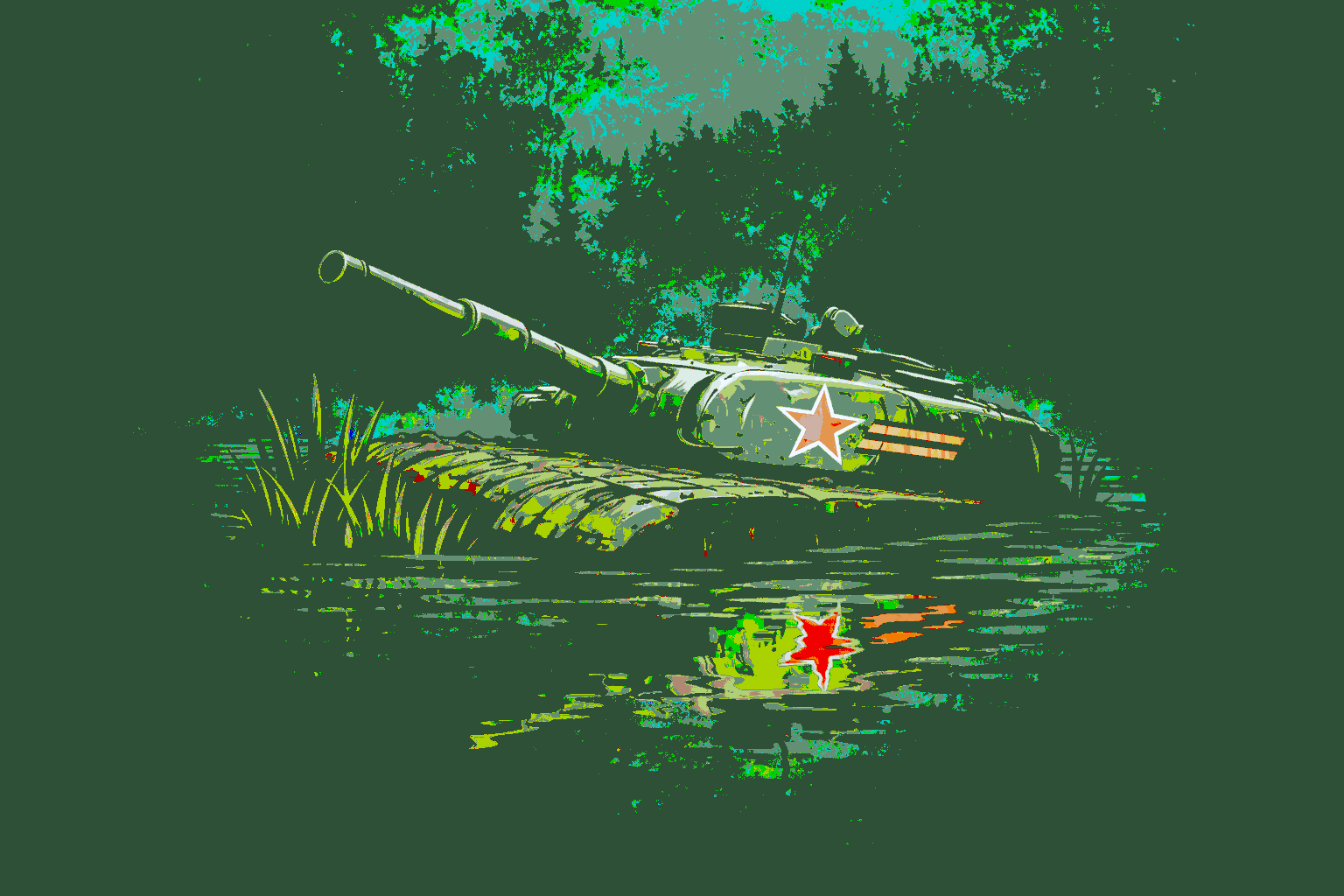
when symbols of violence meet ecological limits
A 1.1 the sinking form
The impulse from the Polish Ministry of Defense: swamps and marshes on the border as a shield, invading tanks will sink! An artistic exploration of instability, loss and transformation.
Working with fragile materials, sculptural processes and spatial experiments, participants investigate how forms react to pressure, erosion and imbalance. It does not simulate war, It explores, what happens, when symbols of violence meet ecological limits. In general the workshop reflects on political, ecological and social vulnerability through material practice.
→ read more about the sinking form
.
A 1.2 alternative belarusian embassy
A speculative and artistic experiment on representation, diplomacy and voice.
ALT BOT explores the idea of an alternative embassy beyond state structures, using performative, digital and narrative tools. The workshop questions borders, legitimacy and political presence from a critical, artistic perspective
→ read more
.
A2: clima-resilience & future imaginaries
Artistic perspectives on climate, extraction and global responsibility.
Workshops focusing on ecological crisis, climate resilience, global interdependencies and the future of participants, not as prediction, but as imagination. Art becomes a tool to counter feelings of helplessness, visualize hope without denying reality, create shared future narratives.
.
A 2.1 be a part
How can young people imagine livable futures in times of crisis?
This workshop area focuses on creative processes that transform fear, uncertainty, and loss into shared future visions.
Art becomes a space for hope, healing, and collective imagination.
→ read more about future imaginaries
.
A 2.2
→ read more
.
A3: local environment - land art projects
Working in forests and landscapes, participants explore ecological resilience through land art projects.
Nature becomes material, metaphor, and partner in artistic reflection.
The workshops connect climate awareness, landscape, and non-militarised concepts of security.
A 3.1 Landscape of ecological resistance
This sub-project explores landscapes as spaces of resistance, vulnerability and ecological memory.
Participants investigate how environmental degradation, extraction and climate change are inscribed into territory, and how artistic interventions can make invisible conflicts and resilient practices visible.
→ read more : four project- proposals
.
A3.2 — My Personal Damocles’ Sword
A3.2 — My Personal Damocles’ Sword
This workshop focuses on personal perceptions of threat, uncertainty and ecological anxiety.
Participants translate individual fears, fragile balances and looming risks into artistic forms, reflecting on how global ecological crises intersect with personal experience and everyday decision-making.
→ read more
.
A3.3 — Swimming Islands
A3.3 — Swimming Islands
This sub-project works with the image of floating or unstable territories as metaphors for displacement and adaptation.
Through experimental constructions and spatial studies, participants explore themes of mobility, survival, ecological fragility and the search for temporary forms of belonging.
→ read more
.
A4: urban space - art in context
Urban space is explored as a field of encounter, transformation, and responsibility.
Participants develop artistic concepts to take part in the development of a european border region.
The focus lies on temporary interventions, youth participation, and dialogue with local communities.
A4.1 — Art in the Roundabout
This sub-project develops artistic concepts for roundabouts as sites of visibility and movement.
Participants design sculptural or visual interventions that engage with circulation, orientation and public perception, exploring how art can interrupt routines and activate transitional urban spaces.
→ read more
.
A4.2 — Lost Places into Safe Spaces
This workshop addresses abandoned or neglected urban sites and their potential for transformation.
Through artistic research and participatory approaches, participants develop concepts for converting “lost places” into temporary safe spaces for encounter, expression and community use.
→ read more
.